
Top Néoprène ou Top Lycra, quelle matière choisir ?
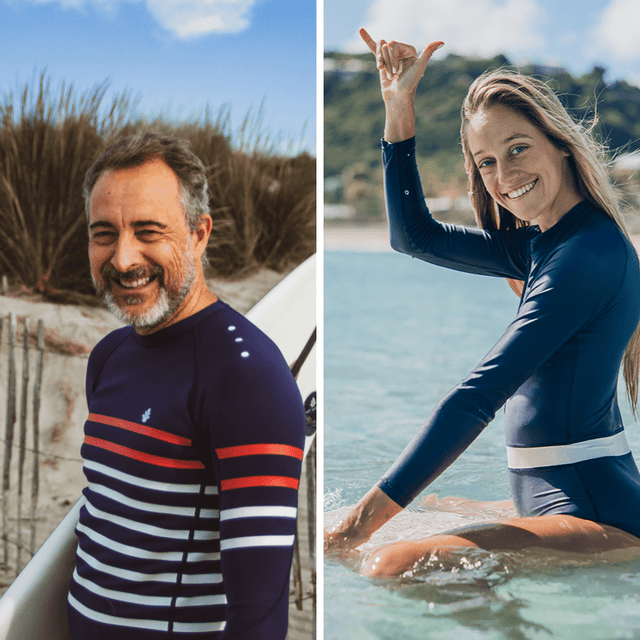
What's the best choice between a neoprene top and a lycra top for watersports? The answer largely comes down to one variable: water temperature. Everything else — discipline, budget, fit — comes after.

The temperature rule: the deciding factor
It's the question everyone asks without always putting it into words. Here's how to decide quickly:
- Water above 20°C (68°F) → a lycra is enough. It protects from UV, dries fast, and doesn't restrict movement. The obvious choice for July–August in the Mediterranean or the Canaries.
- Water between 16 and 20°C (61–68°F) → it depends on the time of day and activity. For early morning or evening sessions, or disciplines where you're regularly out of the water — wing foil, SUP — a neoprene top makes a real difference. On a warm afternoon, a lycra still works.
- Water below 16°C (61°F) → neoprene top, no question. A lycra alone isn't enough, especially out of the water with wind chill.
A single day can justify both: lycra for the midday session, neoprene top for the evening one.
Comparison table: neoprene top vs anti-UV lycra
| Criteria | Neoprene Top | Anti-UV Lycra |
|---|---|---|
| UV protection (UPF50+) | ✅ | ✅ |
| Warmth / thermal insulation | ✅ | ❌ |
| Windproof (out of the water) | ✅ | ❌ |
| Freedom of movement | ✅ Good | ✅ Maximum |
| Ease of putting on | ✅ Easy | ✅ Very easy |
| Price (SJW range) | From €75 to €169 | From €35 to €49 |
| Ideal use | Mid-season, morning/evening, wing foil, longe-côte | Summer, warm water, surf, beach |
Why wear a top at all?
Watersports (surfing, stand up paddling, kitesurfing, surf foil, wakeboarding, sailing…) expose your body to UV rays, water temperature, and repeated friction against the board. Whether for comfort, wellbeing, or health reasons, wearing some form of protection is strongly recommended. The choice between a lycra and a neoprene top depends first and foremost on the context of your session.
The Lycra

Short-sleeved or long-sleeved, lycra tops made from polyester and spandex provide effective protection against UV rays and board rash. Our models feature a loop at the bottom so you can tie it to your boardshort — no more top riding up every time you wipe out.

Easier to put on than a neoprene top, lighter, and with maximum freedom of movement — a real advantage for technical disciplines like surfing or kitesurfing.
That said, its thinness means it offers no thermal comfort. Out of the water with wind, you'll feel the cold quickly. The lycra top is therefore best suited for sessions in warm water (20°C / 68°F and above) or leisure time at the beach and pool.
Slim fit or Loose fit lycra?
Each cut serves a different purpose.
The slim fit sits closer to the body. It's particularly well-suited for surfing: less resistance when paddling, and the fabric doesn't create friction under the arms.

The loose fit is wider and more versatile. It suits all water disciplines — including wing foil and SUP where arm mobility is key — and can be worn out of the water too.

The Neoprene Top

The thickness of the neoprene (2 or 3mm at SJW) makes all the difference. It keeps you warm during morning or evening sessions, shields you from the wind out of the water, and acts as a second skin against prolonged friction.
Like the lycra, the neoprene top provides full UV protection and works across all water activities (surfing, paddling, kitesurfing, wakeboarding, sailing…). The right thickness depends on your local water temperatures.
The neoprene top is the natural choice for:
- Longe-côte (coastal swimming): repeated immersions, often cool water even in summer, long sessions. The Rivage collection is designed specifically for this discipline.
- Wing foil and kitesurfing: you're regularly out of the water and exposed to wind. A lycra alone cools you down fast. Find all our tips in our wing foil guide.
- Mid-season surfing: below 18°C (64°F), sessions lasting over 90 minutes quickly become uncomfortable without thermal insulation.
Our models feature a loop at the bottom so you can attach them to a 2mm neoprene short to prevent them from riding up.
For more technical details on choosing your neoprene top — thickness, neoprene quality, style — everything is covered in our dedicated guide.
The price difference between lycra and neoprene tops
Beyond the thermal benefits, the main distinction between the two is price.
At Saint Jacques, lycra tops start from €35 for short sleeves and €39 for long sleeves. Long-sleeve models with UPF50+ protection are available at €49.
Neoprene tops start at €75 for the vest, €99 for the Paulo short-sleeve, €119–139 for long-sleeve models (Noé, Marinière), and up to €169 for the Venturi over-jacket.
The price gap reflects the difference in technical specification. If you regularly surf or foil in cool water, a neoprene top is an investment that pays off session after session.
To sum up: how to choose?
- Warm water (20°C+ / 68°F+), midsummer → anti-UV lycra
- Cool water, morning or evening sessions → neoprene top
- Wing foil, longe-côte, kitesurfing → neoprene top (wind out of the water changes everything)
- Tight budget, versatile beach + water use → lycra
- Still unsure → start with the lycra, the neoprene will follow naturally
The Saint Jacques difference: style meets performance

Where most neoprene and lycra tops are standardised and generic, Saint Jacques bets on elegance and originality: Breton stripes, polos, jackets — short-sleeved, long-sleeved or vest.
Liked the article? Discover our full collection now!
0 Commentaire
Il n'y a pas de commentaires pour cet article. Soyez le premier à laisser un message !